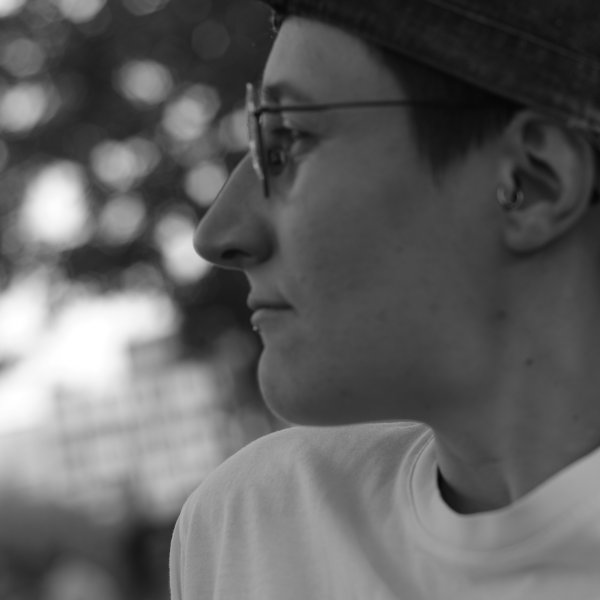
Marta’s home page
Hi!
This is my web page. I use it to show a bit of what I do both at work and in my spare time.
About work

I am a bioinformatician and I have worked as a data scientist at Axxam in the last couple of years. In Axxam I have used my bioinformatics expertise to help clients interpret their sequencing results, and I have gained experience in the analysis of biological assay datasets. I have worked with results from high-throughput screenings on cell-based and biochemical assays, as well as imaging assays. Imaging has been something I worked with since my Master, and in Axxam I could work on cell painting data; cell painting is a very cool imaging technique that allows to describe a cell using thousands of parameters, unbiased by human interpretation ( ask me if you wanna know more, I like explaining stuff :) ).
In the past I worked as a PhD student and postdoc in Cris Kuhlemeier’s group, in Bern. The group studied how evolution works, and used the model plant Petunia to investigate the topic. One of the questions we asked was: how many genes need to change (i.e. mutate) in one species in order for it to evolve into a new species? The group has been working hard on this question, especially by looking at phenotypic traits (for example flower colour) that strongly affect pollinator’s choice (and hence where the pollen will go, and who will the plant reproductive partner be). The group found that these types of phenotypic traits can be changed by one or a few mutations, and that these affect the choice of the pollinators (Sheehan et al. 2016, Esfeld et al., 2018). In my projects I used bioinformatics to answer the group’s questions. I used next generation sequencing to produce genomic and transcriptomic datasets and analysed these in relation with the plant phenotypes. Finding relations between the phenotype measurements and the genomic data has been a big part of my job.
One of the things that I appreciate most when working is exploring datasets (big or small), and understand the stories within the data. I typically plot and visualise the data in many different ways, trying to highlight trends and relations previously unknown.
About myself
I am Italian, I like hiking, climbing and cooking (goes well with the “I’m Italian part”).
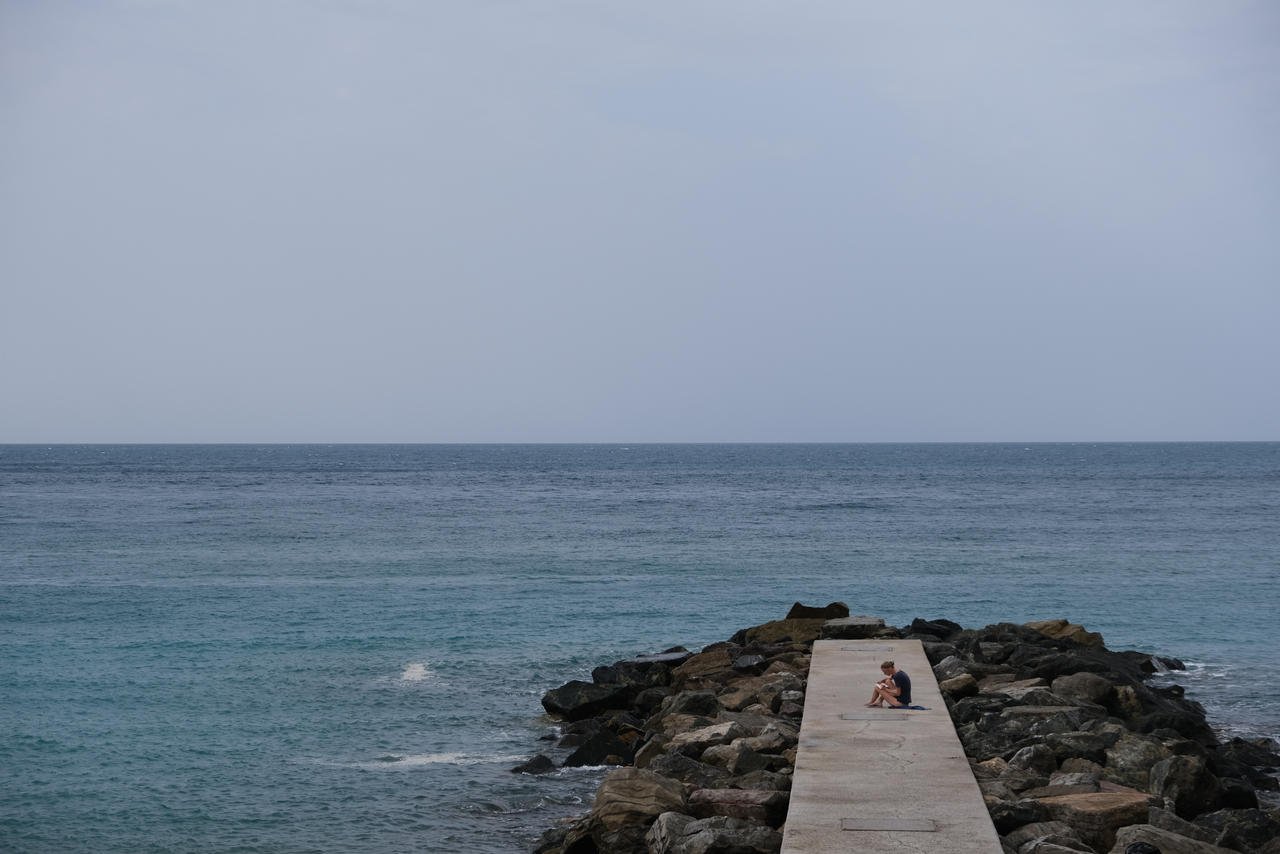
I take photos but I am far from being a professional. I sometimes manage to get photos I enjoy looking at, and that’s enough for me.
In my spare time I also like to assemble and disassemble things. You can find me fixing my bike, or assembling a Raspberry Pi sound system to listen to my favourite web radio.
References
Esfeld, Korinna, Andrea E. Berardi, Michel Moser, Eligio Bossolini, Loreta Freitas, and Cris Kuhlemeier. 2018. ‘Pseudogenization and Resurrection of a Speciation Gene’. Current Biology 28 (23): 3776-3786.e7. doi.org/10.1016/j.cub.2018.10.019.
Sheehan, Hester, Michel Moser, Ulrich Klahre, Korinna Esfeld, Alexandre Dell’Olivo, Therese Mandel, Sabine Metzger, Michiel Vandenbussche, Loreta Freitas, and Cris Kuhlemeier. 2016. ‘MYB-FL Controls Gain and Loss of Floral UV Absorbance, a Key Trait Affecting Pollinator Preference and Reproductive Isolation’. Nature Genetics 48 (2): 159–66. doi.org/10.1038/ng.3462.